
Inside Victoria’s Unspoken World of Deliverance
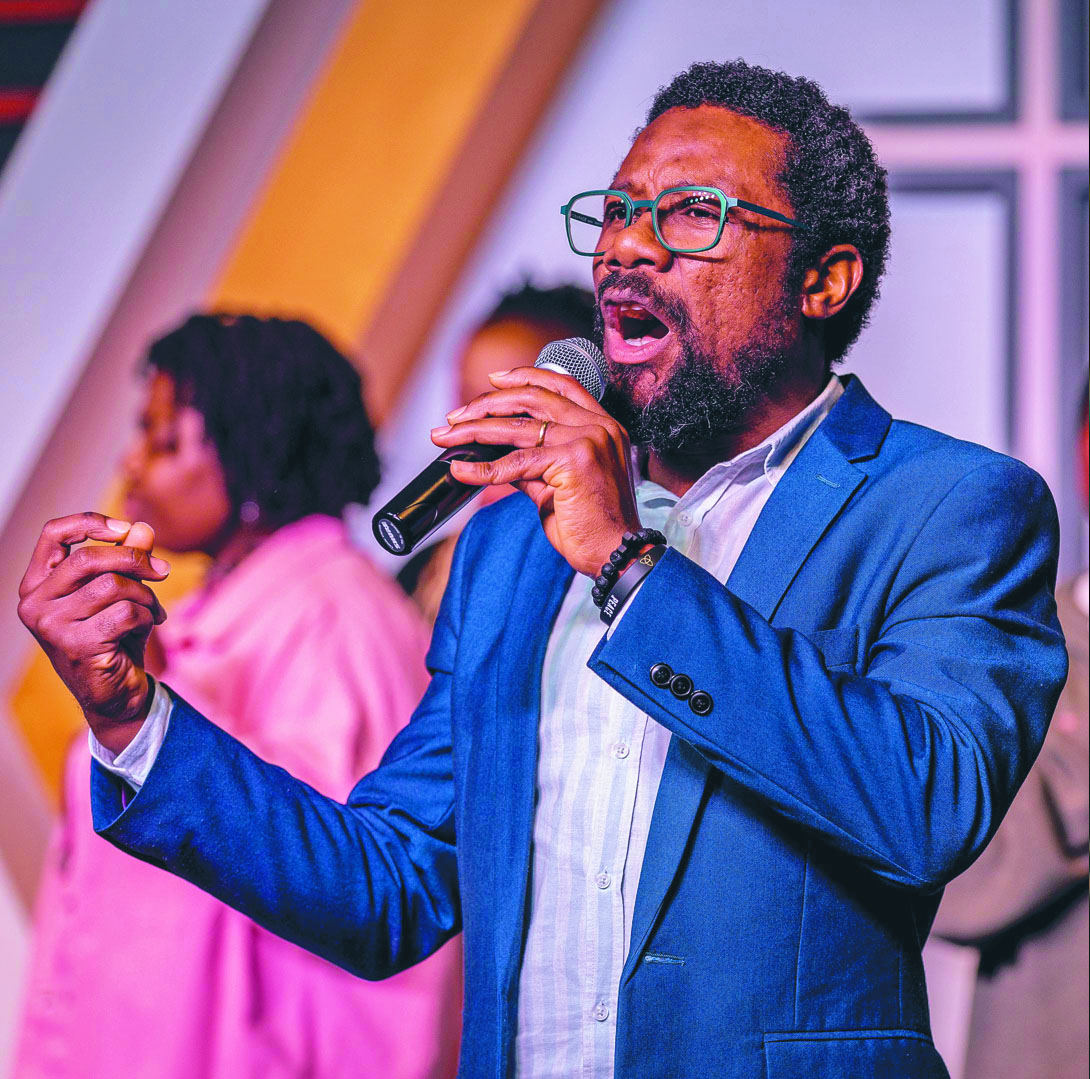
WE’VE SEEN THINGS THAT WORDS CANNOT EXPRESS, THAT THE MIND CANNOT CONCEIVE. PEOPLE BEING TAKEN OVER, MANIFESTING, WE’VE SEEN DEMONS SPEAKING THROUGH PEOPLE
CROSS PURPOSE CHURCH PASTOR
JOSEPH WISDOM SESAY
Pastor Maurice agrees with Father Shadbolt that dabbling in the occult can be dangerous.
But he goes a step further, warning practices such as witchcraft, new age yoga and meditation can be “portals that demons pour in through”.
The pastor stresses that he can make a “distinction” if someone is spiritually oppressed or has mental health issues. He also says he takes the mental health of those seeking help
“very seriously”.
“It’s easy for me to tell if this is a person or if this is a demon, it’s called discerning of spirits,” he explains.
Chapman says when someone “manifests” it is because “the evil and unclean spirits” have a strong reaction to the prayers.
“They begin to gag, vomit and manifest and the person can’t go on because this thing is preventing them and trying to shut them down.
“They have to really fight. But most of the time they are unable to do it by themselves, so they come to a deliverance minister.”
When asked if performing deliverance is confronting, Chapman confidently says “no”.
He felt “called” by God to do it.
“I protect myself with the blood of Jesus Christ,” he declares. Chapman adds his purpose for undertaking deliverance ministry is to set
people free.
“Their expressions change, you see the joy and the peace that come into their heart and I want to bring them closer to Jesus, because after all, it’s their eternal life that is at stake. This is why I do it and to bring glory to God.”
In a street in an industrial area on the outskirts of Melbourne’s southeast, there are car dealerships and auto repair shops.
If you were looking for a church at first glance, it would be hard to find. There are no large buildings with a cross, tower or dome.
Instead, there is a large, factory-like grey building with a gravel car park.
As you walk up to the entrance, you can hear gospel music from inside. It’s a Wednesday night and Pastor Joseph Wisdom Sesay is about to hold a group deliverance at Cross Purpose Church in Cranbourne.
We are immediately greeted by parishioners and sit close to the church’s main stage. A female preacher begins addressing churchgoers.
Behind her is a youth band and group of singers. “When you believe in your most highest God, miracles take place,” she says.
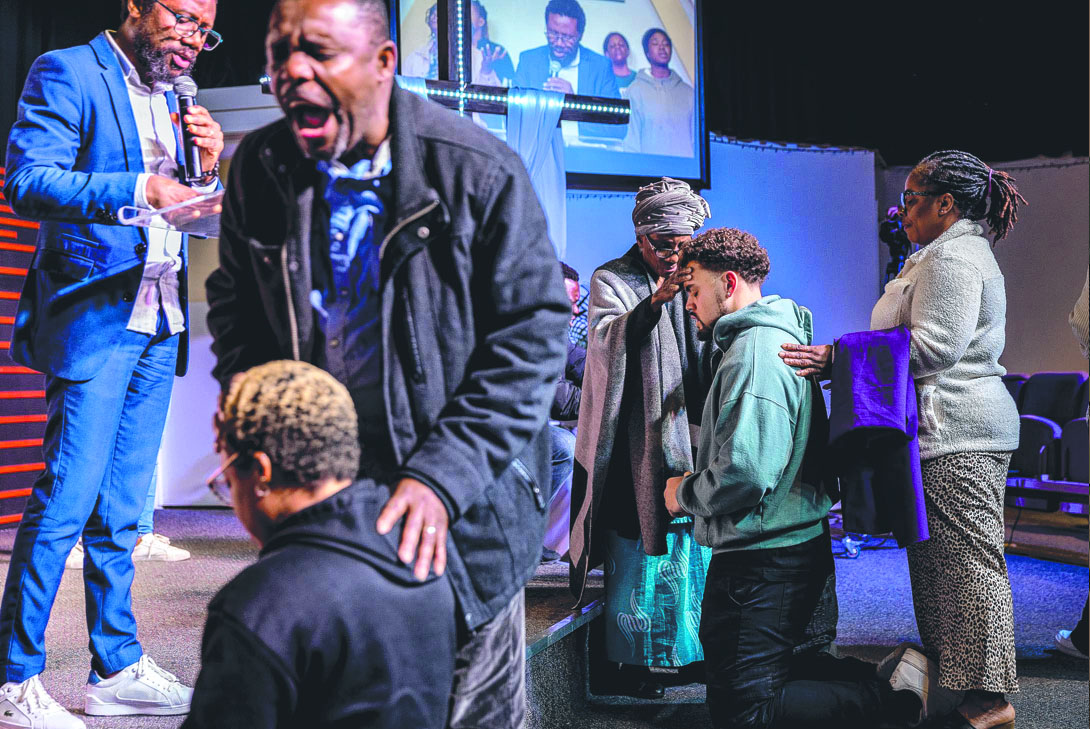
Group deliverance, top and above, at Cross Purpose Church in Cranbourne where church helpers and pastors help anyone affected in the congregation; Pastor Joseph Wisdom Sesay, top and opposite, leads the healing service
After almost 10 minutes, the whole congregation begins singing: “Let your will be my will.” Mid-way through, Sesay, who has been performing deliverance for 20 years, takes the microphone.
He tells people inside the congregation:
“I really feel an anointing being released in this place. There is some power in this room. There is power in this place for deliverance.”
Churchgoers begin waving their hands in the air and continue to sing. The music gets louder and the preaching becomes stronger.
“We come against the power of darkness,” sesay says.
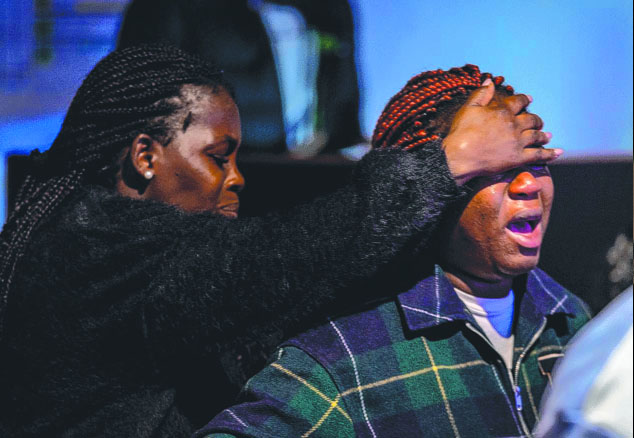
A woman falls to the floor and begins shaking. In front of her, another woman also falls to her knees. A church helper then passes a bucket to another man as he vomits.
A group of young people, mostly in their early 20s, approach the stage. They kneel as they are prayed for and receive deliverance
A woman places her hand on a young man’s forehead. She supports him through the process.
Another man falls to the ground uncontrollably shaking. Church helpers and another pastor quickly rush over to help him.
Sesay says he conducts up to 10 deliverance one-on-one sessions a week. “We have this deliverance service because people want to feel they are present, that they are in the moment,” he says.
“Sometimes people travel from interstate to come just for this time, to be prayed on and anointed with oil.”
Sesay says there are “six levels” of spiritual affliction. “When we talk about deliverance, people are confused and question if they are possessed but I would use the term spiritual affliction, (which) runs from oppression, obsession to possession.
“Possession is the extreme … we have different levels for someone to come to this place. We’ve seen things that words cannot express, that the mind cannot conceive. People being taken over, manifesting, we’ve seen demons speaking through people.
“We’ve seen people growling like animals … they change and become like monsters.”
He says there has been a “significant rise” of deliverance rituals after Covid.
“Right after Covid I would have up to 12 people seeking help. I believe that those moments during Covid erupted a deeper sense within people – there’s been an awakening.
“When someone explains their affliction, the worst you can do is not to validate what they are saying, to tell them it’s in their head.”
Sesay adds that Hollywood is full of misconceptions when portraying exorcisms or deliverance in films.
“It gives people the impression that it’s crazy stuff, people flying, hitting the walls … the reality is not that and I think one of the things that scares people is that
“I don’t use the word possession often because it’s not really in most cases, I use the word spiritual affliction.”
He adds it’s a “mandate” for him to help people through his deliverance ministry.
“It’s my purpose to bring freedom, restoration and transformation, that’s why I am in Australia. I do this because the spirit of the lord is upon me. This is the commission that the spirit of God has given me.”
Professor Sarah Ferber of the University of Wollongong, an expert on the history of Christian exorcism, says exorcisms are on the rise amid their depictions in mainstream films and popular culture.
“It seems to have been given a huge boost since the early ’70s by The Exorcist book and film, which were basically just very successful missionary work,” Ferber says.
“It’s also part of a general trend towards a more charismatic style of religion, calling directly on God, among Catholics and Protestants alike.
“It seems that the greater the exposure of exorcism, the more likely it is to catch on. “But it also has active promoters: Father Gabriel Amorth in the Vatican urged all of the last three popes to have the church do more exorcisms,” she adds.
She says the greatest risk of exorcism is death, saying dozens of people have died, including Joan Vollmer.
Ferber has researched the Vollmer case with legal expert, Dr Adrian Howe.
“More than 30 people have now died because others believed they were defeating the devil, when they were actually assaulting a human being,” Ferber says.
“Exorcisms are absolutely not a form of health care: they are an act of devotion on the part of the exorcist, who wants to worship God and show others that God has responded to them.”
She says the exorcist’s goal is that the person treated, along with any witnesses, will then also give thanks to God.
“They might mean well and of course they are entitled to believe anything they wish, but exorcisms are getting into dangerous territory that most of the mainstream churches are rightly very hesitant about.”
Ferber adds if someone has a mental health issue, they need to see a doctor or counsellor who would not ordinarily sign off on exorcisms.
“Some certainly would,” she says.
“But if they do, they cross the line between their private belief and their scientific training.
Someone with a mental health issue needs to see a trained expert with no interest in evangelising as a form of health care.
“There are plenty of helplines that people can use, without having to undergo an aggressive religious ritual
SOMETIMES IT IS A FINE LINE BETWEEN WHAT MIGHT BE CONSIDERED ILLNESS OR A MANIFESTATION OF A SPIRITUAL CRISIS
“Not every mental illness can be cured even by modern medicine, but there is no evidence any can be cured by exorcism.
“An exorcism is an intervention that is purely moral not psychological.”
University of Melbourne head of
psychiatry Professor Christopher Davey says his major concern with exorcisms is that they are “historically directed” at people with mental illness.
“This was when we knew much less about mental illness and my sense is that a lot of people in the past would have had illnesses like schizophrenia, bipolar disorder and epilepsy and were subjected to exorcisms that were likely to have been quite damaging to them,” Davey says
“There probably were some people who developed distress that wasn’t at the level of what we would consider mental illness, and where they could understand it in the context of their religious beliefs, and where exorcism might have been helpful for them.
Davey says unexplained behaviour such as “manifestations” could be a result of someone becoming “regressed” and entering a
“suggestible” state.
“This could make them act in those sorts of ways … I would really encourage family members when they are worried that a person close to them shows signs of a more serious mental illness that they see a clinician to at least rule that out before undergoing an exorcism.
“You need to respect people’s idiosyncratic and religious beliefs and sometimes it is a fine line between what might be considered illness or a manifestation of a spiritual crisis.
“But for many, by pursuing an exorcism they’re not really getting the help they need,” he adds.
University of Melbourne Professor David Coghill, the Financial Markets Foundation Chair of Developmental Mental Health Departments of Paediatrics and Psychiatry, says people undergoing exorcisms or deliverance could be experiencing “dissociation”.
“They feel detached in some way from their bodies, thoughts or surroundings, they perceive things to be different than we see them objectively,” Coghill says.
“Of course people with major mental health problems can hear voices, they can have hallucinations, they can have beliefs that other people would recognise as untrue.
“People that experience trauma often get these dissociative experiences and when you experience them they are real … they are real experiences but they will recognise them as not being usual for them.”
Coghill says people should be free to seek spiritual support, but he would also encourage them to think about help from medical professionals.
“I just wouldn’t see it as an either/or
situation because we shouldn’t deny people their spiritual or religious freedom to seek the support they want but also they shouldn’t be denied mental health care.”